
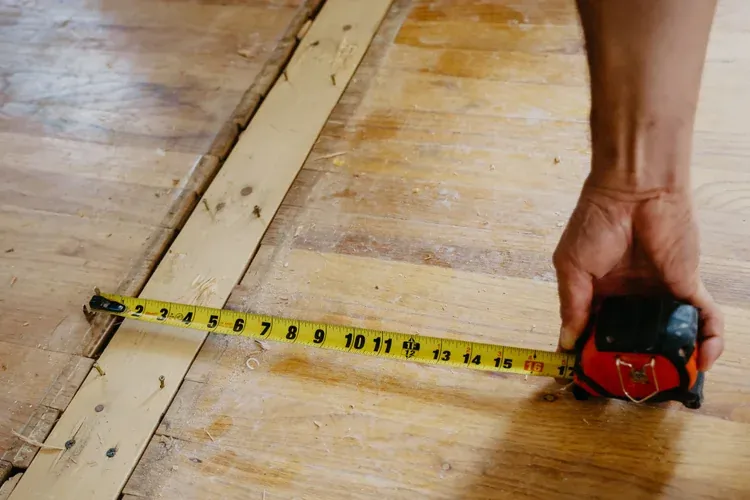
Why Hardwood?
The natural beauty, warmth, longevity, and cleanliness of hardwood flooring is unmatched by any other type of flooring on the market. The initial investment more than pays for itself by increasing the market value of your home and improving your daily lifestyle. We consistently refinish floors that have been installed for over 100 years.
Choosing Your Wood Species
The right species depends on traffic, lifestyle, and aesthetics:
- White Oak — Durable (1290 Janka), stable, takes stain beautifully. The dominant choice in modern interiors.
- Red Oak — Classic American hardwood (1290 Janka), slightly more grain variation, warm pink undertone, excellent value.
- Maple — Very hard (1450 Janka), tight grain, best in light natural finishes.
- Hickory — Extremely hard (1820 Janka), dramatic character, ideal for rustic and high-traffic applications.
- Walnut — Rich, dark, softer than oak (1010 Janka) — best in lower-traffic areas or as a statement floor.
Width and Cut
Wider planks (5" and up) show more natural character and are the current design trend. Narrower planks (2¼"–3¼") are more traditional and move less seasonally. The cut of the plank also matters: flat-sawn shows more figure; quarter-sawn and rift-sawn are more stable and move less with humidity changes.
Subfloor Preparation
The most important — and most overlooked — step. The subfloor must be flat (within 3/16" over 10 feet), dry (below 12% moisture content), and structurally sound. Skipping this step leads to squeaks, gaps, cupping, and premature failure. We never skip subfloor prep.
Acclimation
Wood must acclimate to your home's specific humidity environment before installation. We deliver the flooring and allow it to sit in the space — typically 3–7 days — before laying a single board. This critical step is commonly skipped; the result is boards that expand or contract after installation, causing buckling or gaps.
Installation Methods
Solid hardwood over wood subfloors is nail-down. Engineered hardwood over concrete can be glued or floated. Some engineered products can go nail-down as well. We'll specify the right method for your subfloor type and product selection.
Sanding
Unfinished hardwood is sanded on-site in a sequence of progressively finer grits — from 36 or 40 grit (coarse material removal) through 80 and 100 (fine finish). Our dustless sanding system captures 99% of particles at the source. Edge sanders handle the perimeter and corners.
Stain Selection
We apply sample stains directly on your floor, in your home's lighting, before you commit to anything. We recommend evaluating samples at different times of day — morning and evening light can look dramatically different. Stain color looks different on red oak versus white oak; we'll help you understand how your chosen species interacts with your desired tone.
Finishing
We apply a sealer coat followed by two to three coats of water-based or oil-modified polyurethane, screening lightly between each coat. Sheen options: matte (very low reflectivity, hides dust), satin (the most popular balance), or semi-gloss (more reflective, shows more wear). Full cure time is 7–14 days; you can walk on the floor in 24 hours but should avoid rugs and furniture placement for a full week.
Long-Term Care
- Sweep or vacuum daily with a bare-floor setting (beater bar off).
- Damp-mop monthly with a hardwood-specific cleaner — never wet mop.
- Maintain indoor humidity between 35–55% year-round.
- Place felt pads under all furniture; replace annually.
- Use a mat outside entry doors and a rug inside to trap grit.
- Refinish every 7–15 years as wear indicates.